Baptism at Hagia Sophia – Byzantine Rite, Baptistry, and Processions
Walk through the catechumenate and baptismal liturgy in the Great Church, explore the baptistry remains, and see how the space evolved over time.
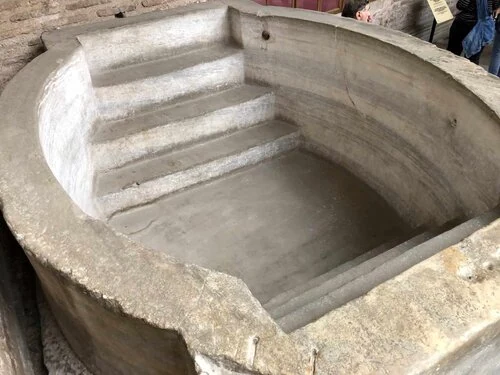
Before it was a mosque or a museum, Hagia Sophia was the Great Church of Constantinople. Here, baptism was not a private moment but a public, luminous passage into the Body of Christ — sung, processed, and celebrated across a dedicated baptistry beside the basilica.
1) Why a Separate Baptistry?
- In Late Antiquity and the Middle Byzantine period, baptisms were commonly celebrated in stand‑alone baptistries — purpose‑built halls or rotundas adjacent to major churches, often with a large immersion font.
- Architectural separation allowed for catechumenal rites, changing garments, and the processional climax toward the church for the Eucharist.
- Hagia Sophia’s baptistry followed this pattern: a distinct complex tied liturgically to the Great Church yet suited to the tactile, water‑centered initiation rite.
2) The Catechumenate: Preparing for Baptism
- Candidates (often adults in the early centuries) enrolled as catechumens, attending instruction, prayers, and exorcisms, learning the Creed and the Lord’s Prayer.
- Sponsors (godparents) testified to candidates’ sincerity and accompanied them through the rites.
- The Scrutinies and exorcisms intensified near the baptismal season, typically at Pascha (Easter) and sometimes Theophany (January 6), the feast of Christ’s baptism.
3) Architecture of the Hagia Sophia Baptistry
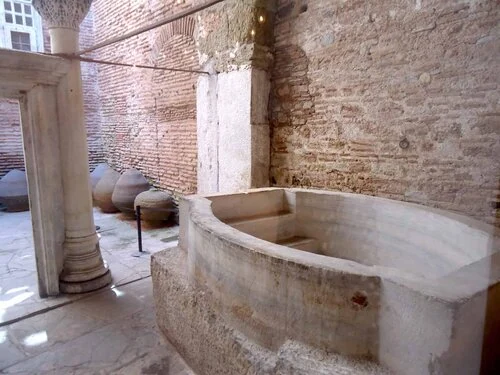
- The complex featured a principal hall and the marble immersion font — monumental enough to accommodate adults.
- The font’s shape and rim height suggest full‑body immersion or immersion up to the chest with triple pourings.
- Dressing chambers and side niches supported the choreography: disrobing, anointing, immersion, vesting in white, and a final procession toward the Great Church.
4) Step‑by‑Step: The Byzantine Baptismal Rite
- Renunciation & Profession - Facing west, the catechumen renounces Satan; turning east, they confess faith with the Creed.
- Exorcisms & Breath - The priest prays exorcisms; the sign of the cross and a gentle breath symbolize the Spirit’s power over the old life.
- Oil of Catechumens (Pre‑baptismal Anointing) - Hands trace oil on chest and shoulders: strength and freedom from bondage.
- Triple Immersion in the Name of the Trinity - “The servant of God, N., is baptized in the name of the Father, and of the Son, and of the Holy Spirit.” Water and word together enact dying and rising with Christ.
- Chrismation (Sealing with Holy Myron) - Immediately after emerging, the baptized are sealed with fragrant chrism: “the gift of the Holy Spirit.”
- White Garment & Light - Clothed in white, bearing candles, the neophytes begin life “illumined.”
- Procession to Hagia Sophia - Singing psalms and litanies, the assembly processes to the Great Church for Eucharist, the first full participation at the altar.
The rite joined teaching, gesture, scent, sound, and movement. In Constantinople, this drama unfolded on a civic scale, with the Patriarchate and imperial court sometimes in view.
5) When Were Baptisms Celebrated?
- The prime night was the Paschal Vigil (Easter), with a secondary focus at Theophany. Over time, infant baptism increased, but the ritual architecture kept adult‑sized fonts and processional routes.
- Catechumens learned to recite the Creed only late in Lent (“traditio symboli”), guarding the mystery until the sacrament.
6) Sound, Light, and Textiles
- Imagine the vestibule lamps, chants echoing against marble, and the lustre of white garments glinting in torchlight.
- Towels, oil flasks, and robes were not props but liturgical tools, turning space into an enacted theology of new birth.
7) From Baptistry to Tomb: Later Transformations
- After 1453 the complex changed functions. The former baptistry eventually became the burial place of Mustafa I and Ibrahim; related spaces held oil or served other needs before conversion to tomb use.
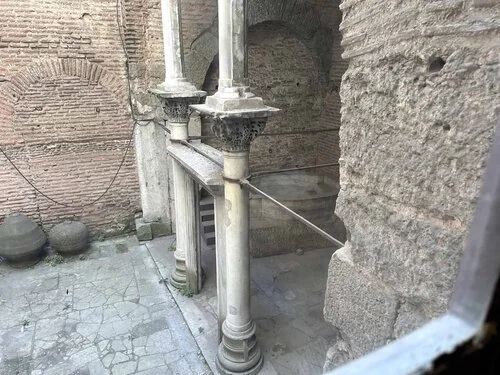
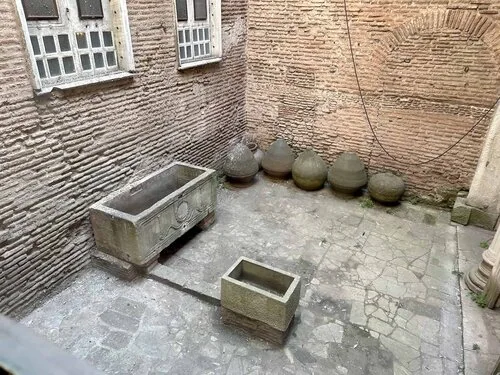
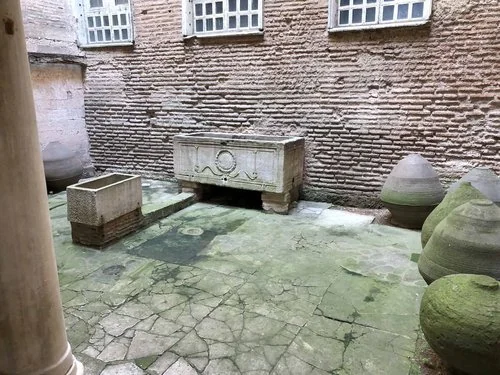
- Today, visitors can see the baptismal font in the courtyard and identify the later funerary adaptations.
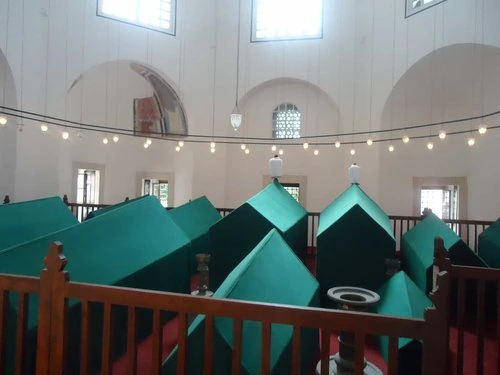
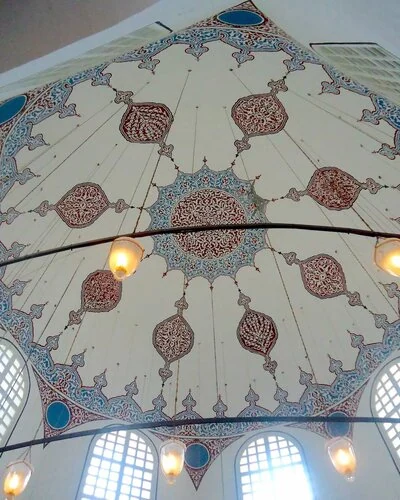
8) What You Can See Today (Practical Notes)
- The courtyard and font are visible close to the southwest area outside. Access policies evolve; check current onsite guidance.
- Read the courtyard as a ritual stage: approach → renunciation → immersion → sealing → procession. The distances help you imagine bodies in motion.
9) Photographing the Space Respectfully
- Use natural light; mid‑morning brings balanced illumination in the courtyard. Avoid climbing or leaning on the font.
- Compose a wide frame showing font + doorway to hint at the route toward the Great Church.
10) Glossary (Quick Reference)
- Catechumen: One preparing for baptism; participates in parts of the liturgy.
- Chrismation: Post‑baptismal anointing with holy myron (chrism), the seal of the Spirit.
- Scrutinies: Pre‑baptismal rites of prayer and exorcism.
- Theophany: Feast of Christ’s baptism, January 6.
Image Highlights
Bottom Line
Hagia Sophia’s baptistry taught the faith through space and sequence: a dramatic passage from darkness to light, from water to altar, from old life to new.
About the Author

Ritual Historian
I built this to help you meet Hagia Sophia with calm, context, and care—so the grand ideas, quiet prayers, and bright stones speak clearly.
Tags
Comments (0)
Loading comments...