Horaires de visiteFermé
|Dimanche, Septembre 13, 2026Ayasofya Meydanı, Sultanahmet, Fatih, 34122 Istanbul, Türkiye
Retour à mosaics
saint
Apse Theotokos – First Mosaic After Iconoclasm
Why the apse Theotokos matters and how to glimpse it from the upper gallery today.
12/10/2025
12 min read
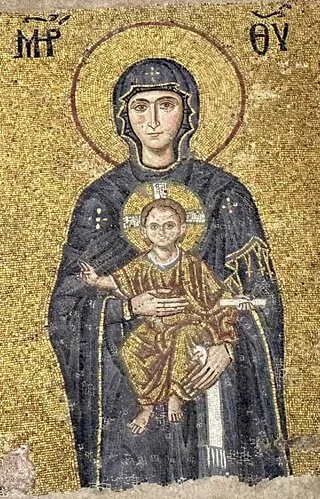
The apse Theotokos (Virgin and Child) was unveiled in 867, announcing the end of Iconoclasm. A single image, carefully chosen, reopened the door to figural sacred art in Byzantium.
Where to View
- Best vantage from the upper gallery, looking toward the apse above the mihrab’s location today. At times the mosaic may be veiled; visibility varies.
Historical Stakes
- After decades of dispute over images, this calm enthroned Virgin communicates a doctrinal settlement: images can teach without usurping the prototype.
- The choice of a seated Theotokos emphasizes both incarnation and royal dignity.
Reading the Icon
- The Virgin’s throne and the Child’s blessing hand express proximity and transcendence together.
- Drapery lines guide the eye upward toward the dome, where light crowns the space.
Conservation & Present Use
- Layers of history (Ottoman, museum era, mosque) have prompted alternating strategies: cover, uncover, protect.
- Today’s approach seeks balance between worship and heritage.
Viewing & Photo Tips
- Wait for stable lighting; bright shafts can wash detail. A slight oblique angle often reveals tesserae without glare.
Image Highlights
Bottom Line
The Theotokos in the apse is a milestone: a serene declaration that beauty can serve truth in the heart of a great church.
À propos de l’auteur

Mosaic Storyteller
J’ai fait ceci pour vous aider à rencontrer Sainte‑Sophie avec calme, contexte et soin—pour que les grandes idées, les prières silencieuses et les pierres lumineuses parlent clairement.
Tags
Theotokos
apse mosaic
Iconoclasm
upper gallery views
Comments (0)
Leave a Comment
Loading comments...