Hagia Sophia History – Dome, Mosaics, 1453 Conversion & 2020
Trace Hagia Sophia’s transformations across empires, faiths, and conservation eras to understand its layered identity.

Hagia Sophia has stood since 537, surviving quakes, rites, regimes, and restoration. Its story is a lesson in engineering ambition and cultural resilience.
Justinian’s Vision (537)
Architect‑scholars Anthemius of Tralles and Isidore of Miletus conceived a dome that stretched possibility.
The original dome partially collapsed after earthquakes; reconstructions refined buttressing and pendentives.
Engineering Snapshot: The rebuild after quake impacts adjusted the dome geometry and improved lateral thrust management across piers.
Mosaics & Light
Glittering gold tesserae and iconography once covered vast surfaces.
Windows at the dome base create a halo of light — a technical illusion that defines Hagia Sophia’s aura.
Period Visual Motifs Notes Byzantine Christ Pantocrator, Theotokos, imperial portraits Some panels uncovered, others protected Ottoman Calligraphy medallions, mihrab alignment Integrates worship axis while keeping spatial drama
1453 Conversion & Ottoman Additions
Following the Conquest of Constantinople, Hagia Sophia became the imperial mosque.
Minarets, mihrab, minbar, and calligraphic medallions shifted the visual grammar while preserving structural drama.
Perspective: Rather than erasing, the additions reframed the interior around a new liturgical axis.
Museum Years (1935–2020)
- Secularization enabled conservation access; mosaic uncovering progressed with international expertise.
- Visitor infrastructure matured, forging modern tourism patterns around Sultanahmet.
Reconversion (2020–)
Hagia Sophia returned to active mosque status with prayer‑sensitive visiting.
Conservation continues under protections balancing worship needs and heritage standards.
Timeline (Condensed)
- 537: Consecration
- 1204: Latin occupation impacts
- 1453: Mosque conversion
- 1935: Museum era begins
- 2020: Active mosque status
Image Highlight
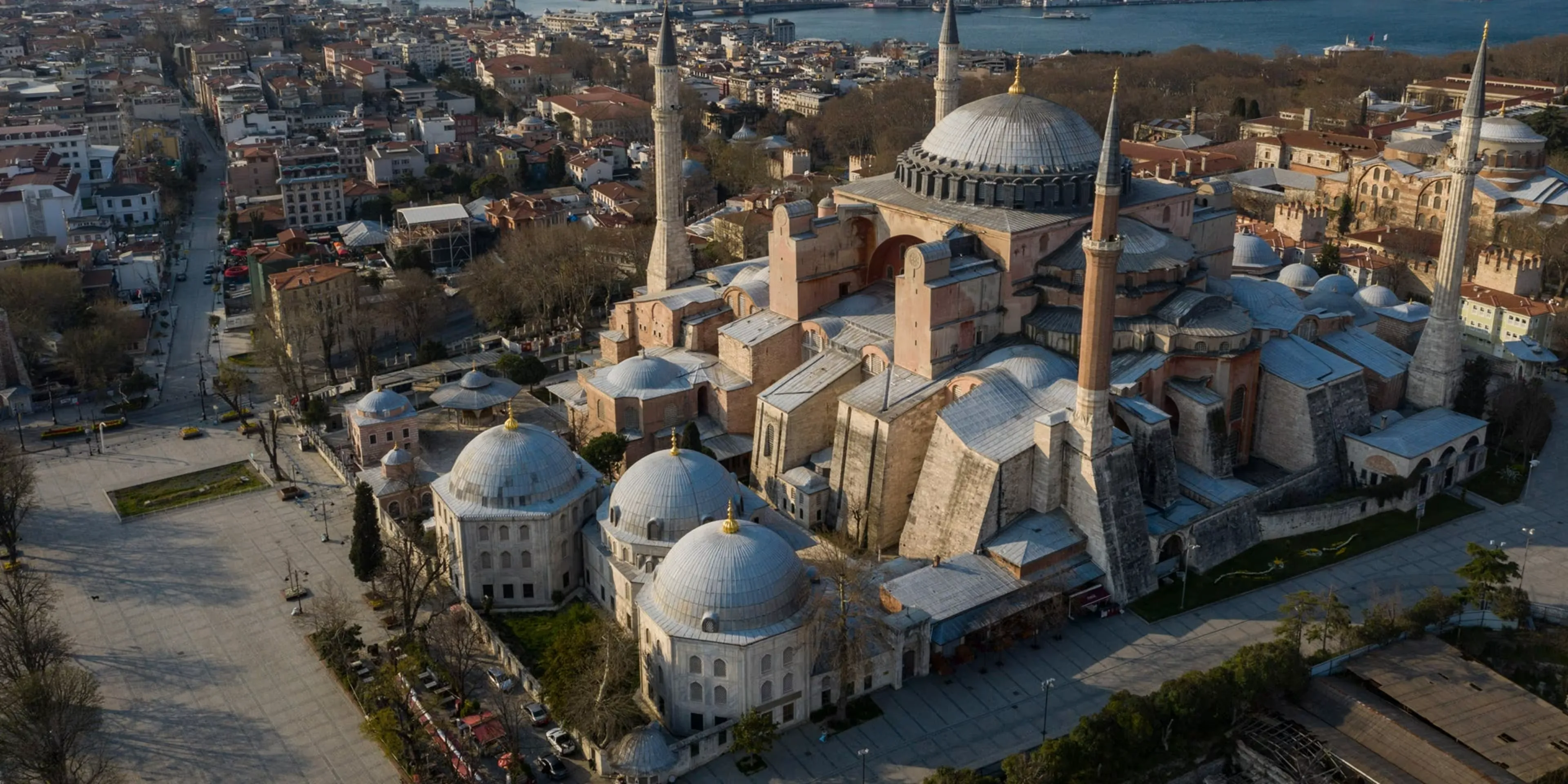

Reflection
Hagia Sophia’s identity is cumulative — Byzantine ambition and Ottoman devotion interlace within one living monument.
O autorze

Heritage Narrator
Przygotowałem(am) to, by pomóc Ci spotkać Hagię Sophię w spokoju, z kontekstem i troską—by wielkie idee, ciche modlitwy i lśniący kamień mówiły jasno.
Tags
Comments (0)
Loading comments...